
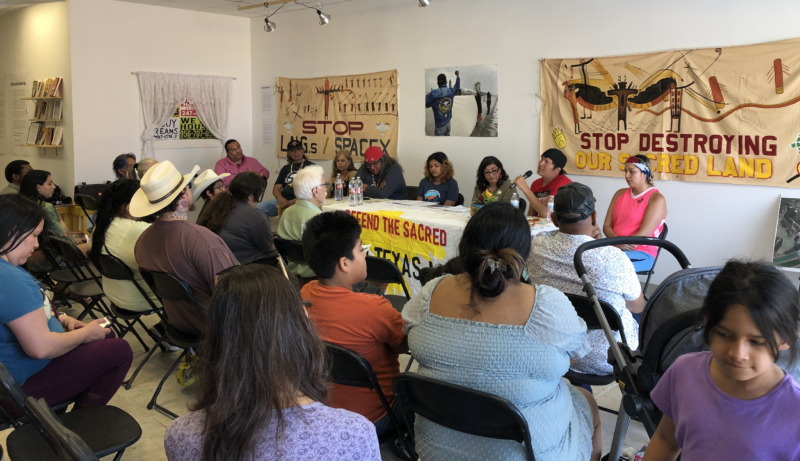
RAN is supporting the fight against the expansion of methane, also known as liquefied “natural” gas (LNG), in the Gulf South region of the U.S. Methane expansion projects result in massive emissions and are causing irreversible damage to the ecosystem and frontline and Indigenous communities in the Rio Grande Valley in South Texas. The Carrizo Comecrudo Tribe of Texas is a leader in resisting extractive industries of all kinds: from oil and gas to SpaceX and border wall construction.
Rio Grande LNG and Texas LNG export terminals, if built, along with the Rio Bravo pipeline, would spew greenhouse gas emissions equivalent to approximately 40.4 million cars on the road per year, impact sacred Indigenous sites, pave over a “greenfield” of undeveloped wetlands, pollute nearby wildlife refuges, and divide a national wildlife corridor, transforming sites near the Port of Brownsville into industrial-scale export hubs complete with storage tanks, flare stacks, and explosion risks.
The region already struggles with major health disparities and is at high risk from climate change impacts. In addition to its environmental justice impacts, the Texas LNG facility would be located on the Garcia Pasture, an ancestral burial site of the Carrizo Comecrudo Tribe, which is listed by the World Monuments Fund as endangered and irreplaceable. Texas LNG did not consult the Carrizo Comecrudo Tribe, native to the South Texas Rio Grande Delta, and therefore did not obtain their Free, Prior, and Informed Consent.
The Carrizo Comecrudo Tribe has been a frontline community leader in the fight against the build-out of methane gas infrastructure for years, including through community organizing, intervening at permit hearings, hosting the Carrizo Comecrudo Tribunal for Human Rights, among many other activities. The successful community organizing and unstable gas market led to the cancellation of the Annova LNG project in 2021, banks leaving the Rio Grande LNG project, and several additional banks developing exclusion policies for LNG. Community leaders also won a major legal victory in 2021, requiring federal regulators to re-evaluate the environmental justice and climate impacts of the proposed build-out.
One of the many frontline projects supported by Community Action Grants was Bridges to the Ancestors, an Indigenous youth-led run/walk that raised awareness about methane’s toxic impacts while building alliances across Texas. The 10-day journey passed through frontline communities impacted by methane, with the goal of highlighting how various facets of fossil fuel infrastructure affect the community, from extraction and transportation to processing and export.
The Carrizo Comecrudo Tribe used the 600-mile walk to connect and collaborate with local communities resisting fossil fuels, including a series of ‘Town Hall’ meetings organized within the Carrizo Comecrudo Tribe’s ancestral territory. During the week-long walk, French mega-bank Société Générale withdrew its financial support from the highly controversial Rio Grande LNG shale gas export project. More recently, Chubb Insurance became the first major insurer to stop covering Rio Grande LNG.
For years, frontline community organizers from the Carrizo Comecrudo Tribe of Texas and its partners have fought tirelessly to defend their communities and to support a livable climate. These collective efforts have led to many victories along the way, while their fight for justice continues.