
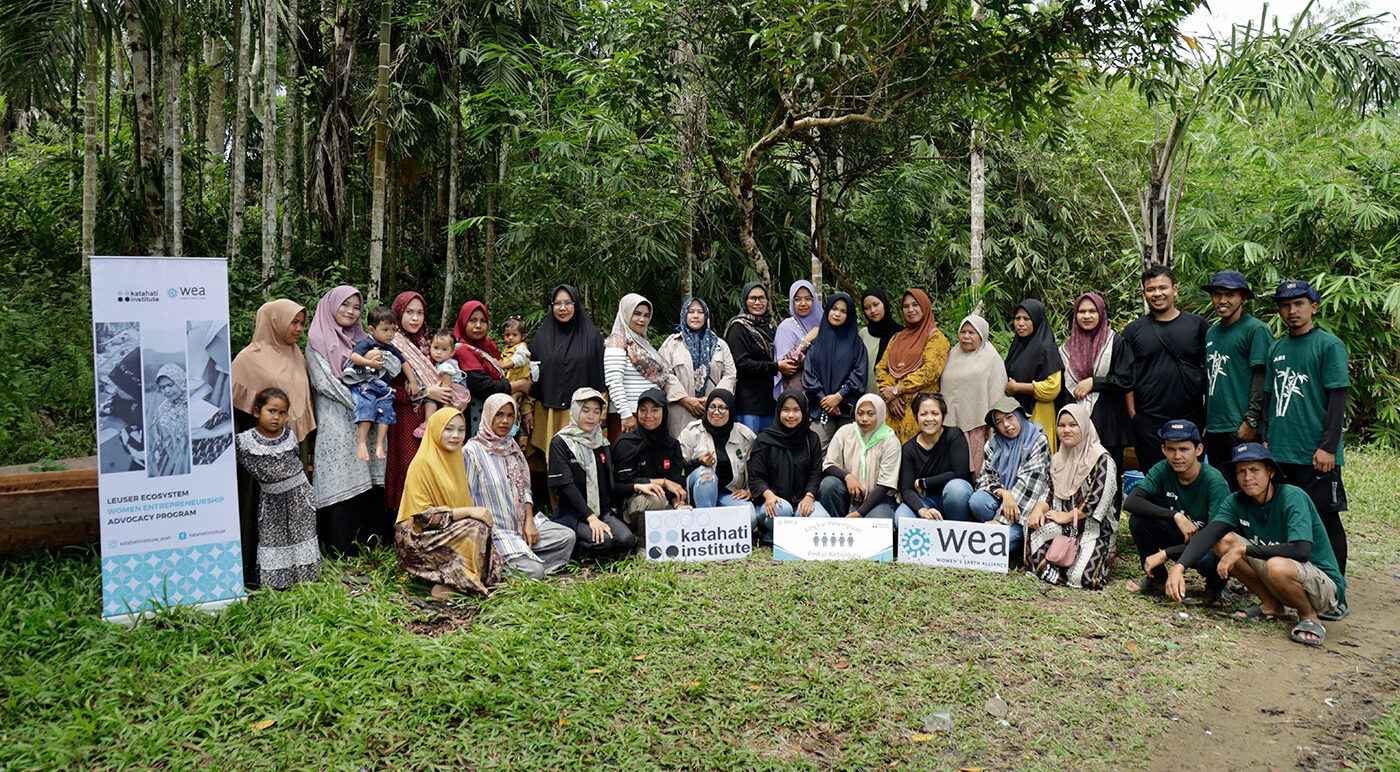
Samar Kilang village in Bener Meriah Regency of Aceh, Indonesia, is isolated with limited road access and is almost untouched by development in the buffer zone of Gunung Leuser National Park. Takengon is a town in Central Aceh Regency, located in the highlands of western Sumatra, situated on the shores of Lake Laut Tawar, just north of the Leuser Ecosystem.
The Leuser Ecosystem is among the most ancient and life-rich ecosystems ever documented by science, and is the last place on Earth where Sumatran orangutans, elephants, tigers, rhinos, and sun bears still roam the same habitat. Located primarily within the province of Aceh on the northern tip of the island of Sumatra, it is, by every measure, a world-class hotspot of biodiversity and is widely acknowledged to be among the most important areas of intact rainforest remaining in all of Southeast Asia.
But the Leuser Ecosystem exists at a tenuous crossroads. Despite being technically protected under Indonesian national law, industrial development for palm oil, pulp and paper plantation, and mining continues to threaten the entire ecosystem, as well as the well-being of millions of Acehnese people who depend on it for their food, water, and livelihoods.
Over the past few years, Katahati Institute has carried out a number of programs for the development and capacity building for communities in the region. Through its overall work in the region, Katahati Institute has found that women in these communities currently have limited space in discussions about forest management due to traditional governing structures, despite the fact that they are disproportionately impacted. Katahati Institute works to increase women’s participation in democratic spaces, generally in the region, and has worked with communities to emphasize the importance of women’s perspectives in discussing forest management.
Through this project specifically, they are facilitating and assisting the Samar Kilang and Takengon communities in developing sustainable livelihoods with input and participation from women with a focus on non-timber forest products (NTFPs), including palm sugar, pineapple fiber, and jernang (also known as Dragon’s Blood), which produces a high-value red-colored resin. This is being carried out in coordination with Gayo Sejahtera Women’s Cooperative and project activities include visits to NTFP production houses, along with community and journalists workshops, as well as art performances, to promote and teach NTFP best practices and the importance of protecting the Leuser Ecosystem, both for its critical wildlife habitat and for the Samar Kilang and Takengon communities’ food, water and livelihoods.
This grant was made possible through RAN’s partnership with Global Greengrants Fund.